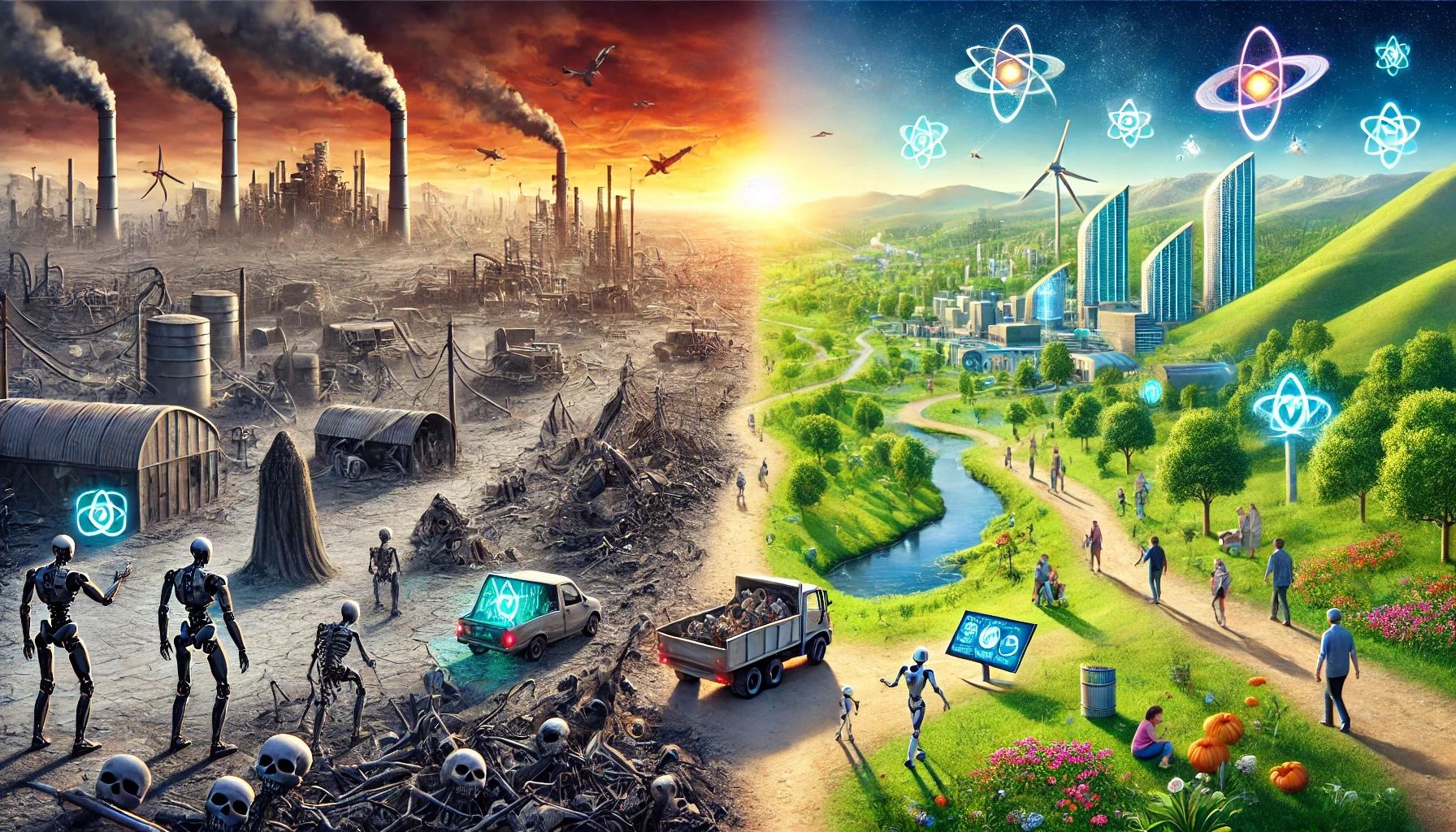
AI is amazing, right? It’s changing how we do things, solving big problems, and opening up many possibilities. But here’s the thing: it’s also creating a mess. A hidden digital mess that’s getting bigger every day.
It’s not just a pile of discarded data or obsolete computer models. It’s the colossal energy consumption to fuel these sophisticated algorithms. It’s a digital landfill, neglected and growing.
This junk isn’t just harmless clutter. It’s a real problem that’s using up tons of energy and resources. And it’s not just about the environment. It’s about biased computer programs that make unfair decisions and the risk of AI being used to spread lies and fake news.
Fortunately, the solutions are within our reach. We can design more efficient programs, master the art of data management, and even repurpose old computer components. We can steer AI towards a fair and sustainable future.
In this article, we’ll examine this AI junk problem in more detail. We’ll discuss the different kinds of waste it creates and why it’s a big deal. But we’re not just here to complain. We’ll also discuss real solutions that can make AI a force for good, not just a source of waste.
AI’s Big Appetite for Data: The Digital Feast That Never Ends
Chatbots like ChatGPT, Gemini, and others are part of a growing family of AI models that have an insatiable hunger for data. They gobble up massive amounts of text, images, and other information to learn and get smarter. Think of it like feeding a growing teenager who’s always raiding the fridge. But instead of food, these models are constantly snacking on digital data.
The problem is that all that data munching takes a huge amount of energy. Training a single large language model can use as much electricity as 50,000 homes in a year! It’s like having a giant data centre that’s always humming, sucking up power and pumping out heat.
And it’s not just the energy used during training. Once these models are up and running, they keep generating data like crazy. They churn out endless streams of text, code, and even images. It’s like a digital factory that never stops, churning out products that we may not even need.
So, we end up with two massive problems: the environmental cost of feeding these data-hungry models and the growing mountain of digital waste they leave behind.
More Than Just Bits and Bytes: The Hidden Environmental Cost of AI Hardware
AI isn’t just about code and data. It also relies on specialised hardware, like the powerful GPUs found in gaming computers. These chips are the muscle behind AI, helping it process information at lightning speed.
But there’s a catch: these chips are like high-performance sports cars – they’re expensive, they need constant upgrades, and they eventually end up in the scrap heap. The rapid pace of AI development means these chips become outdated quickly, contributing to the growing problem of electronic waste.
Imagine a world where everyone buys a new car every few years, only to junk it and buy another one. That’s the reality of AI hardware. And just like car manufacturing, making these chips requires a lot of energy and resources, adding another layer to AI’s environmental impact.
Algorithms Gone Wild: When AI Misbehaves
Even the most innovative AI models can go off the rails if they need to be appropriately trained. If an algorithm learns from biased data, it can make discriminatory decisions or reinforce harmful stereotypes. It’s like a student who only reads books written by one type of person—their view of the world will be limited and skewed.
Take, for example, facial recognition software that has trouble identifying people with darker skin tones. This isn’t just a technical glitch; it’s a real-world consequence of biased algorithms.
However, even unbiased algorithms can cause problems. If they’re well designed, they can be efficient, wasting energy and resources. Imagine a self-driving car that takes the longest, most complicated route to get you to your destination. It’s a waste of time and fuel.
The AI Spam Machine: Floods of Fakes and Digital Deception
AI’s ability to generate content is a double-edged sword. On the one hand, it can create helpful summaries, write code, or even generate creative artwork. But on the other hand, it can also churn out spam emails, write fake news articles that sound incredibly convincing, or even create deep fakes—videos that make it look like someone is saying or doing something they never did.
Imagine opening your inbox and finding it flooded with spam emails, all written by AI. Or scrolling through your social media feed and seeing fake news stories that look so real that you can’t tell what’s true anymore. That’s the potential danger of the AI spam machine. It threatens our trust in information and our ability to make informed decisions.
Escaping the AI Wasteland: A Roadmap for a Sustainable Digital Future
Alright, we’ve talked about the mess AI is making – the data guzzling, the outdated hardware, the biased algorithms, and the flood of fake stuff. Now, let’s roll up our sleeves and talk solutions.
Lightening the Load: Building Smarter, Leaner AI
Well, those data-hungry models that eat up so much energy, well, we can make them less gluttonous. Imagine training a dog to eat less and exercise more – that’s what we need to do with AI. We can create algorithms that are like efficient athletes, using less energy to get the job done. For example, instead of training a model on every single piece of information, we can teach it to focus on the most significant bits. This way, it learns just as much but uses way less energy. It’s like studying smarter, not harder.
Cleaning Up the Digital Clutter: Data Spring Cleaning, Anyone?
AI generates a ton of data, like a hoarder who can’t stop collecting stuff. But we can keep only some little scrap of information. We can be like Marie Kondo and ask ourselves, “Does this data spark joy?” If not, it’s time to let it go.
This means setting up rules for how long we keep data and regularly deleting stuff we don’t need. It’s like cleaning out your closet – it might be hard at first, but you’ll feel so much better once it’s done. And your digital space will be a lot more organised, too.
Old Tech a New Life: Recycling and Reusing AI Hardware
Those fancy AI chips might become outdated quickly, but they’re still useful. We can be like creative tinkerers who turn old junk into treasure. An old chip can’t power the latest AI model, but it could still be used for less demanding tasks, like running a simple website or controlling a smart home device.
When those chips finally give up the ghost, we can recycle them, just like we do with plastic bottles and aluminium cans. This way, we can reduce electronic waste and ensure that those precious metals and materials don’t go to waste.
Raising AI Rights: Teaching Fairness and Responsibility
Remember those biased algorithms that can lead to unfair decisions? We can fix that by teaching AI to be fair and responsible, just like we teach our kids to be kind and respectful.
This means making sure the data we use to train AI is diverse and representative of everyone. It’s like making sure everyone gets a fair chance to speak in a classroom, not just the loudest voices. We can also teach AI to explain its decisions so we can understand how it’s thinking and make sure it’s not being biased.
By taking these steps, we can turn the AI wasteland into a thriving digital ecosystem. It’s about using AI to benefit everyone, not just the tech giants. It’s about creating a future where AI and sustainability go hand in hand. It’s about building a better world, one byte at a time.